UCLA Earth, Planetary, and Space Sciences Distinguished Alumni Lecture

745922main_McComas-226From the Sun to the Edge of the Solar System

Dr. David J. McComas, ’86

Assistant Vice President, Space Science & Engineering, Southwest Research Institute
Professor of Physics, University of Texas San Antonio


The Sun produces a million mile per hour wind of hot ionized gas that flows out all directions in space all of the time. This solar wind interacts with the planets and other objects in the solar system and, at Earth, produces both beautiful aurora and dangerous space weather that can kill orbiting satellites. Further out, the solar wind inflates a bubble in the local interstellar medium that helps protect the entire solar system from dangerous galactic cosmic radiation. Over the past decade our knowledge of the outer reaches of this bubble – our heliosphere – have grown immeasurably with both direct sampling by the two Voyager spacecraft in these distant reaches and the first remote imaging of the global interaction by the Interstellar Boundary Explorer – IBEX. This talk tells their story.
Bio
David J. McComas is the Assistant Vice President of the Space Science and Engineering Division at the
Southwest Research Institute (SwRI) in San Antonio, Texas. He is also an Adjoint Professor at the University of Texas, San Antonio – Southwest Research Institute (PhD & MS) graduate program in Physics, which he helped to establish in 2004. From 1998 through 2000 Dr. McComas served as the founding Director of the Center for Space Science and Exploration (CSSE) at Los Alamos National Laboratory. He was concurrently the NASA Program Manager at Los Alamos and served as the Group Leader for Space and Atmospheric Sciences (NIS-1) from 1992-1998. Dr. McComas received his B.S. Degree in Physics from MIT in 1980 and Ph.D. in Geophysics and Space Physics from UCLA in 1986.
Dr. McComas is a Fellow of the American Physical Society (APS), American Geophysical Union (AGU) and the American Association for the Advancement of Science (AAAS). He has received numerous awards and accolades including the 2014 COSPAR Space Science Award, a NASA Exceptional Public Service Medal in 2015, and AGU’s James B. Macelwane Award in 1993.
Dr. McComas is the Principal Investigator for NASA’s Interstellar Boundary Explorer (IBEX) Mission, the Two Wide-Angle Imaging Neutral-Atom Spectrometers (TWINS) Explorer Mission-of-Opportunity, the Integrated Science Investigation of the Sun (ISIS) on Solar Probe Plus and the Ulysses Solar Wind Observations Over the Poles of the Sun (SWOOPS) Experiment; he is also the lead Co-Investigator for the Solar Wind Electron Proton Alpha Monitor (SWEPAM) instrument on the Advanced Composition Explorer (ACE), the solar wind analyzer for the New Horizons mission to Pluto (SWAP), and the Jovian Auroral Distributions Experiment (JADE) on the Juno spacecraft that will orbit over Jupiter’s poles. Prior to moving to SwRI, he was the Principal Investigator for DOE’s series of 10 Magnetospheric Plasma Analyzer (MPA) instruments at geosynchronous orbit. Dr. McComas is Co-Investigator on NASA’s Medium Energy Neutral Atom (MENA) instrument on the IMAGE Midsized Explorer, the plasma instrument for the Cassini mission to Saturn (CAPS), the GENESIS Discovery mission, ISTP Polar spacecraft’s Thermal Ion Dynamics Experiment (TIDE), the Cluster plasma electron instrument (PEACE), and is a team member on the New Millennium Plasma Experiment for Planetary Exploration (PEPE). Dr. McComas recently served on the NASA Advisory Council (NAC) and chaired the NAC Science Committee (NAC-SC), and has served on numerous other committees and panels for NASA, AGU, the National Academy of Science’s National Research Council, the University of California, Los Alamos National Laboratory, and the State of New Mexico. This service included chairing NASA’s Sun-Earth Connections Advisory Subcommittee (SECAS) and Solar Probe and Solar Probe Plus Science and Technology Definition Teams, as well as serving as a member of NASA’s Space Science Advisory Committee (SScAC) and on the ESA/NASA Solar Orbiter Science Definition Team.
Dr. McComas has invented a variety of instruments and missions for space applications and holds six patents. He is an author of over 500 scientific papers in the refereed literature spanning topics in heliospheric, magnetospheric, solar, and planetary science as well as space instrument and mission development. These papers have generated over 19,000 citations, with h=70, m=2.5 (h/years since PhD)
See Google Scholar profile for David J. McComas:
Prevalence and Properties of Planets: Discoveries from Kepler and K2

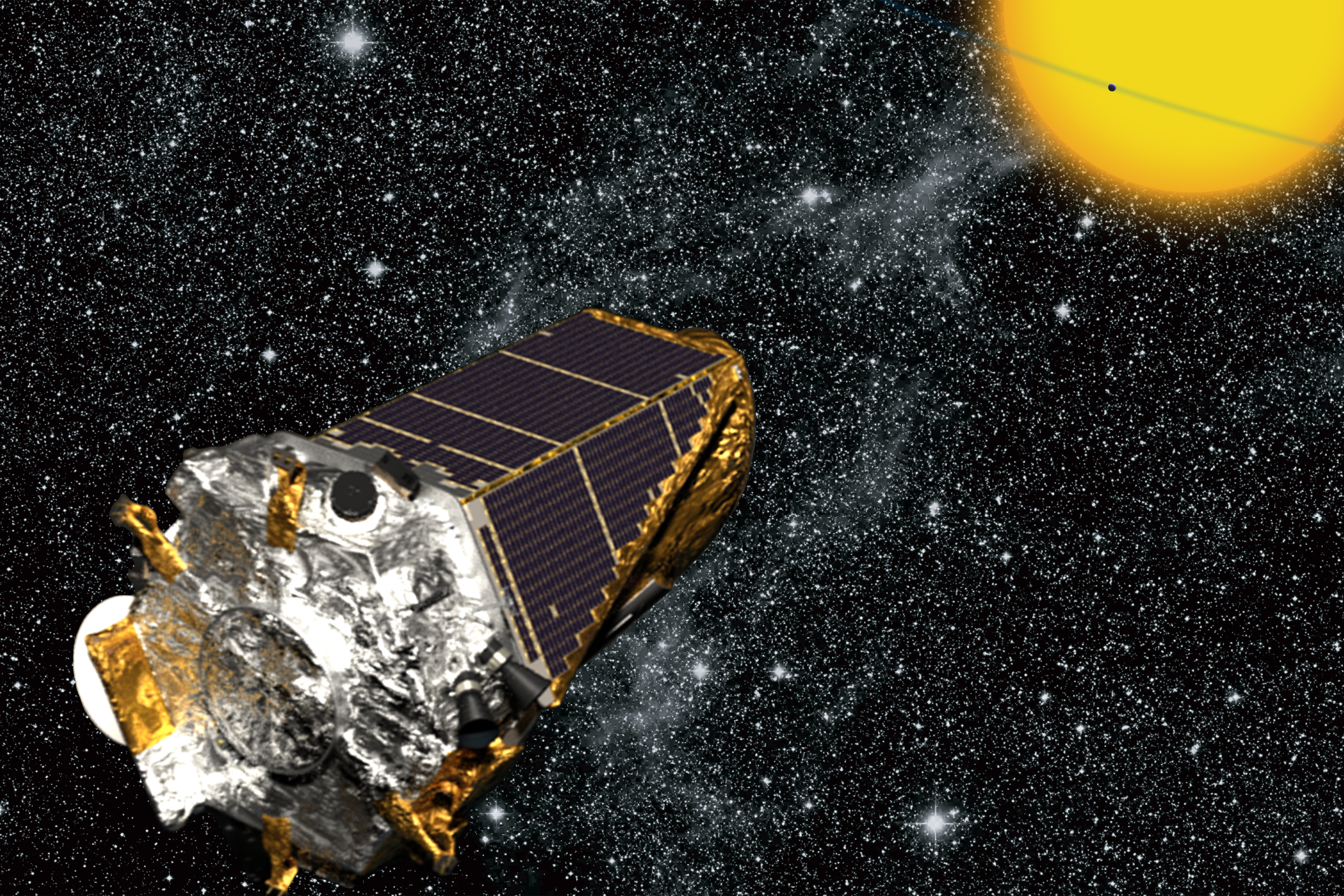
ticker_keplerAs we mark the twentieth anniversary of the discovery of the first planet orbiting another Sun-like star, the study of extrasolar planets is maturing beyond individual discoveries to detailed characterization of the planet population as a whole. No mission has played more of a role in this paradigm shift than NASA’s Kepler mission. Discoveries from the prime Kepler mission demonstrated that small planets (< 3 Earth-radii) are common outcomes of planet formation around G, K, and M stars. While Kepler detected many such planets, all but a handful orbit faint, distant stars, which are not amenable to precise follow up measurements. NASA’s K2 mission has the potential to increase the number of known small, transiting planets around bright stars by an order of magnitude. I will present the latest results from my team’s efforts to detect, confirm, and characterize planets using the K2 mission.

October 23, 2015: Future opportunities for Planetary Sciences studies with the Thirty-Meter-Telescope International Observatory

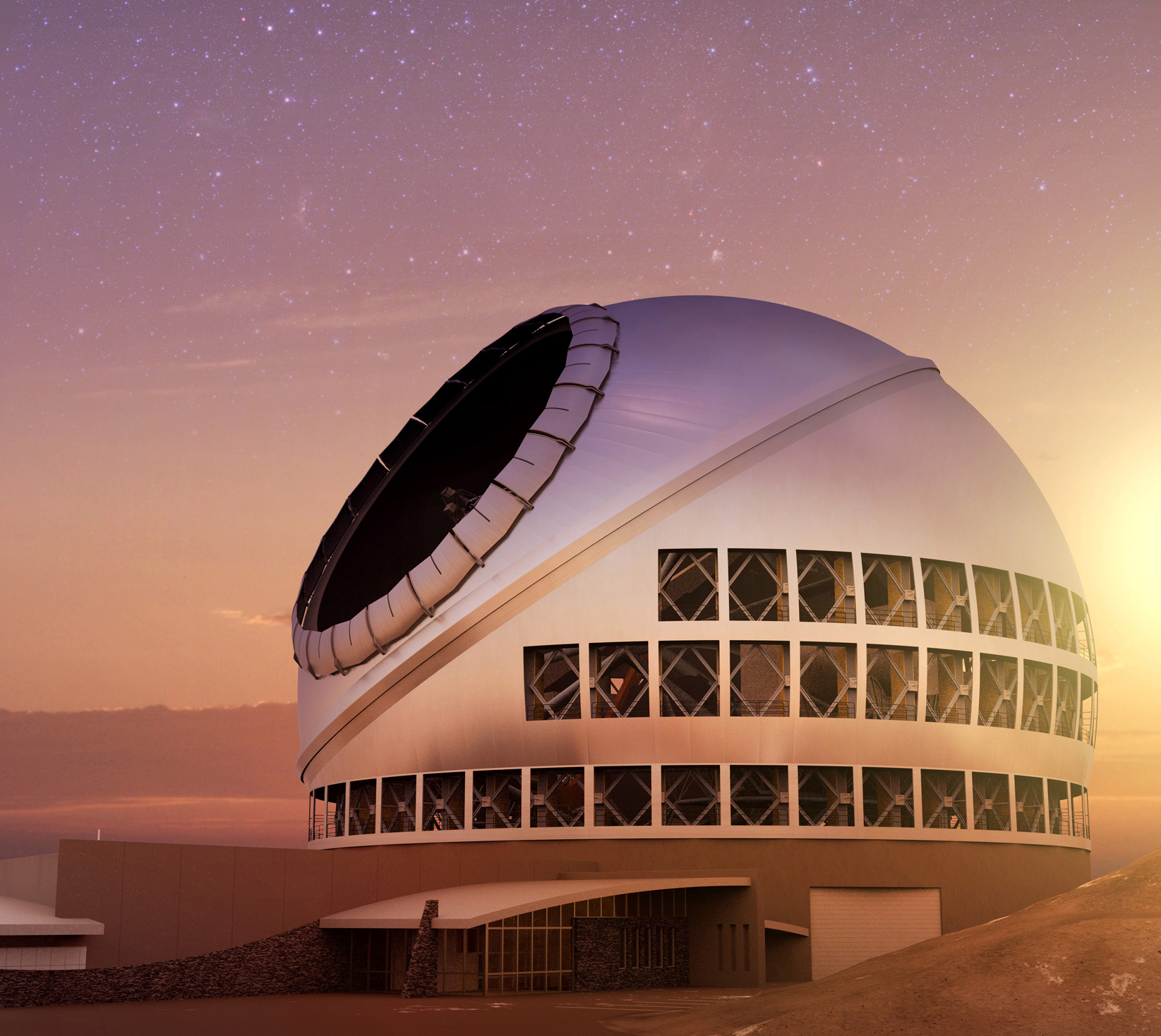
tmtsunsetI’ll present a brief overview of the Thirty-Meter-Telescope project, whose construction on top of Mauna Kea is scheduled to take about eight years, with first-light currently planned for the horizon 2023/24, and start of science operations soon after. I’ll review the expected observing performances of the facility and its first-light instruments, which will combine imaging and spectroscopic capabilities, along with powerful adaptive-optics corrected wavefronts and the use of a laser-guide-star facility in some cases. TMT will enable ground-based exploration of our solar system – and planetary systems at large – at a dramatically enhanced sensitivity and spatial resolution across the visible and near-/thermal- infrared regimes (e.g. ~7km spatial resolution at a wavelength of 1micron on main-belt asteroids, 20km on Galilean satellites, 40km on Titan, etc). TIO operations will meet a wide range of observing needs and the implementation of science programs will take into account the stringent observing time constraints often encountered for observations of our solar system such as, for instance, the scheduling of target-of-oportunity observations, the implementation of short observing runs, or the support of long-term “key-science” programmes.

UCLA scientists reset the clock on the beginning of life on Earth

scientificamerican1005-58-I1
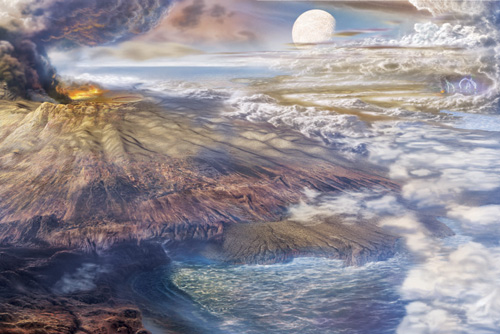
Artist’s concept of a hospitable Early earth environment.

UCLA geochemist Beth Ann Bell and her colleagues have dug deep into the annals of Earth’s history and turned up the result that life may have begun much earlier than previously thought. In the study, recently published in the Proceedings of the National Academy of Sciences, they examined microscopic graphite inside tiny, ancient zircon grains from the Jack Hills in Western Australia. The graphite samples, which are made of carbon, contain information about the chemistry of the planet during the time they were formed. This chemistry, in turn, can help scientists decipher if biologic processes were at work. Although there are several processes that can form graphite, Bell and her colleagues favor the possibility that their sample formed as organic matter and was slowly incorporated into Earth’s geology through plate tectonics.

Their results suggest that life began 4.1 billion years ago, more than 300 million years earlier than previously thought. The research also suggests that early Earth was a much more hospitable environment than the typical hot, lifeless, and sterile planet that is imagined for that time period. To read more about the study, check out the UCLA Newsroom press release and Science News.


October 16th, 2015: The Effects of Magma on the Dynamics of Io’s Interior

Most planets in the solar system lose their internal heat through convection beneath a stagnant lid. However on Io, tidal heating is so intense that its mantle is partially molten. This magma migrates through Io’s mantle and erupts onto its surface. This is thought to be the main mechanism through which heat is removed from Io’s interior. Previous studies have only considered either solid-state mantle convection or magma migration, but magma generation and migration is not independent from mantle convection. Thus understanding the structure of Io’s mantle and how it loses its internal heat requires considering both mantle convection and magma migration. We use the mantle convection code StagYY, which includes the generation, segregation, and eruption of magma, to conduct two-dimensional numerical simulations of mantle convection in Io’s mantle. This allows us to constrain the distribution of melting in Io’s mantle and test the hypothesis that heat loss through volcanic eruptions dominates over heat loss through stagnant lid convection.