Do you dream of becoming an astronaut and studying space, but aren’t sure how? Love adventure and the great outdoors, doing hands-on research? Are you fascinated by the Moon and Mars, and wonder how Earth and even distant worlds can form and harbor life? Pursue these topics and many more with an M.S./Ph.D. in Planetary Science at UCLA, and secure your future in space science! Follow the link below to apply and learn more:
https://epss.ucla.edu UCLA #planetaryscience #space #astronaut #geology #gobruins NASA
Jessica Watkins was just selected for a mission on the International Space Station!! She got her Ph.D. in Geology in 2015 (advisor: Prof. An Yin), focusing on “the emplacement mechanisms of large landslides on Mars and Earth.”
As the keynote speaker during Commencement in 2021, Jessica remarked that the NASA Artemis lunar program relies heavily on the work of EPSS, helping her prepare for astronaut training: “We are building off of our understanding of the Apollo samples analyzed in this department, planning landing sites and traverses using maps of lunar water ice developed within this department, and applying fundamental principles of geological field work taught in this department.”
The UCLA Department of Earth, Planetary, and Space Sciences is happy to announce the initiation of a new graduate degree program in Planetary Science to add to its three existing graduate degree programs in Geology, Geochemistry, and Geophysics and Space Physics. UCLA has had a world-class research program in the field of Planetary Science for many years, and the department currently has eighteen faculty members who are actively engaged in planetary research on a full-time or part-time basis. The new degree program will focus on training the next generation of planetary scientists by providing a curriculum of graduate-level courses as well as opportunities to conduct research at the forefront of knowledge in the field. Applications are now being accepted for new M.S .and Ph.D. students for the 2022-2023 academic year. Financial support is available through merit-based and competitive fellowship awards, research assistantships, and teaching assistantships that provide stipends in varying amounts and may include tuition, fees and nonresident supplemental tuition.
In the third of a ‘trilogy’ of the latest missions to explore Mars, first China with Tianwen-1 successfully reaching the Red Planet (with plans to ambitiously deploy a rover to the surface in May/June of this year). Second was Dubai and the United Arab Emirates successfully sending their Hope spacecraft to Mars, being the very first Arab nation to make a stake in the field of planetary science with a successful mission, paving the way for other countries to do the same. Finally, today, it is with tremendous pleasure to announce that the United States and NASA has successfully launched, deployed, and landed another rover (Perseverance) this afternoon (Earth time) on Mars at Jezero Crater.
Many UCLA scientists have a major stake in this mission such as fellow iPLEX member, Dr. David A. Paige, the Deputy Principal Investigator of the RIMFAX instrument. Paige, his research team, and his Graduate Students will lead the charge in new science found on Mars with this instrument, in easily, the heaviest, most scientifically capable, and best technology yet to land on Mars. As interestingly, another UCLA professor and iPLEX member, Dr. Mackenzie Day has led a team of students and researchers interested in studying Jezero Crater and the likelihood of water on Mars, and what this may mean geologically, and biologically for everything to be found at this scientifically fascinating location. The list goes on and on for other researchers in UCLA’s Earth, Planetary, and Space Sciences Department (EPSS) where we are interested to know more about the origins of life, planetary science, geology, seismology, space physics, and how each of these fields are actually intertwined together.
We hope that much great science will be done in the years to come and look forward to a treasure trove of data and scientific analysis that will come from this rover and mission. Not only is it a testament to the engineering teams at NASA’s Jet Propulsion Laboratory, making another successful touchdown on Mars, but it is also to inspire others to do the same, and learn more about planetary science.
-Dave Milewski
NASA’s Perseverance rover has landed on Mars following a 239 million-mile journey through space
It traveled around 12,000mph and will deploy a parachute to slow down before landing safely on the surface
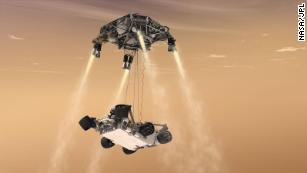
The sky crane performed the same landing maneuver as with Curiosity using long Nylon cords
The crane released Perseverance from its grasp and flew to safety, allowing the rover to start its journey
Perseverance will search for biosignatures in the Jezero crater that is said to be an extinct lake
It will collected samples and cache them across Mars for a separate mission in 2023 to retrieve
NASA’s Perseverance rover has successfully landed on Mars following a 239 million-mile journey.The rover survived the ‘seven minutes of terror’ when it endured tumultuous conditions that battered the craft as it entered the Martian atmosphere and approached the surface.
‘NASA works. When we put our arms together and our hands together and our brains together, we can succeed. This is what NASA does,’ says chief engineer and landing veteran Rob Manning.
Perseverance shot like a speeding bullet through the atmosphere going 12,000mph and successfully deployed the sonic parachute which slowed it down to make a soft landing on the surface.
It descended down on the parachute, the backshell separated and the sky crane maneuver carried Perseverance to the ground attached to long Nylon cables.
Perseverance touched down at the base of an 820-foot-deep (250 meters) crater called Jezero, a former lake which was home to water 3.5 billion years ago.
The Martian surface is littered with craters but what makes Jezero Crater so special is that it an inflow and outflow channel, which suggests it was filled with water some 3.5 billion years ago.
Thomas Zurbuchen, of the NASA Science Mission directorate, said: ‘It was an exciting day to think we’re looking to bring samples of Mars back to Earth.’
‘We’re turning our rover into a robotic geologist and astrobiologist, collecting samples that we will be bringing back to Earth, that is what we’re looking forward to.’
Figure Caption: NASA’s Perseverance rover has successfully landed on Mars following a 239 million-mile journey through space. Pictured is the first image the rover has taken on the Red Planet (Image credit: NASA/Jet Propulsion Laboratory (JPL)/California Institute of Technology (Caltech))Figure Caption: The descent of the $2.2billion car-sized spacecraft was lived stream as it went through the ‘seven minutes of terror’ when it endured tumultuous conditions that battered the craft as it entered the Martian atmosphere and approached the surface (Image credit: Reuters)
Radio signals between Perseverance and NASA took 11 minutes to be sent due to the time it takes for the signals to travel all the way to Mars and back again.
As a result, Perseverance’s on-board computers and 19 cameras were entirely responsible for the descent.
Former US Vice President, Mike Pence, congratulated NASA on the achievement, adding that ‘Perseverance will help us continue to unlock the mysteries of space and one day land Americans on the Red Planet’.
Unlike previous NASA rovers to Mars — Sojourner, Spirit, Opportunity and Curiosity — Perseverance is purposely being sent to a more treacherous part of the red planet.
This is because the Jezero Crater is thought to be an extinct lake and is also close to curious rock formations, all of which are of great scientific interest back on Earth.
The massive crater is said to have once flowed with water and is littered with carbonates and hydrated silica.
Carbonates similar to those at the crater’s inner rim have been found in fossils on Earth which are billions of years old. Hydrated silica is known for its ability to preserve biosignatures.
Figure Caption: Perseverance touched down at the base of an 820-foot-deep (250 meters) crater called Jezero, a former lake which was home to water 3.5 billion years ago. Pictured is one of the first images the rover sent back after landing on the Martian soil (Image credit: NASA/Jet Propulsion Laboratory (JPL)/California Institute of Technology (Caltech))Figure Caption: During Perseverance’s decent, NASA was unable to make contact with the rover. However, once signal was gain the team erupted in applause (Image credit: NASA/Jet Propulsion Laboratory (JPL)/California Institute of Technology (Caltech))
Prior to the landing, NASA officials did say ‘it is not guaranteed that we will be successful.’
To increase the chance of success, Perseverance was the first mission to be fitted with ‘Terrain Relative Navigation’ which will take images of the Martian surface during the descent. The information gathered from this will be used to inform the rover’s decision as to where it will land.
Figure Caption: The spacecraft carrying the rover separated ten minutes before atmosphere entry and Perseverance will then enter Mars’ atmosphere at around 12,000 miles per hour — quick enough to travel from London to New York in 15 minutes. This rapid speed generated a huge amount of air resistance and friction which warms Perseverance up to an enormous temperature in excess of 2,000°F (Image credit: AP)Figure Caption: A parachute deployed at around four minutes into the descent, when the rover was still seven miles from the surface. NASA says this is a critical step and involves the biggest parachute ever sent to another planet (Image credit: NASA/Jet Propulsion Laboratory (JPL)/California Institute of Technology (Caltech))Figure Caption: A landing harness carrying Perseverance which is fitted with eight rocket thrusters took control of the descent after the parachute is jettisoned process and slowed the craft down from 190 miles per hour to a mere 1.7 miles per hour while also steering the lander (Image credit: AP)Figure Caption: The final stage of the landing is where the rocket-powered craft attempted the same maneuver for landing as the Curiosity did in 2012 using the sky crane. Nylon cords lowered Perseverance 25 feet below and after it touched down on the Martian surface, the cords detached and the sky crane will fly away (Image credit: NASA/Jet Propulsion Laboratory (JPL)/California Institute of Technology (Caltech))Figure Caption: NASA has sent a number of orbiters to Mars, which allowed them to find Perseverance’s target – the 28-mile Jezero Crater (pictured). The Jezero Crater is thought to be an extinct lake and is also close to curious rock formations, all of which are of great scientific interest back on Earth (Image credit: NASA/Jet Propulsion Laboratory (JPL)/California Institute of Technology (Caltech))Figure Caption: The first act of Perseverance — which has been based on the blueprint of Curiosity and is the seven feet tall, nine feet wide and weighs 2,260 pounds — was e to release its accompanying Ingenuity helicopter (pictured). The copter will fly at an altitude that is similar to 100,000 feet on Earth, allowing it to gather geology data in areas the rover is unable to reach (Image credit: AP)
It completed the final approach to the surface and slowed the craft down from 190 miles per hour to a mere 1.7 miles per hour while also steering the lander.
The craft will then attempt the ‘skycrane’ maneuver which was first developed for Curiosity in 2012.
Nylon cords will hold Perseverance 25 feet below the jetpack and gently place the rover down on the red soil.
At this point, the craft will cut the nylon cords and fly away to ensure it does not damage Perseverance.
Dr Brown says the whole process is fraught with danger.
‘You never know what Mars throws at you for surprises while the lander carries out these complex maneuvers by itself,’ he adds.
NASA established a radio connection with the rover before Perseverance did a series of checks and then starts its experiments and investigations.
Unlike previous NASA rovers to Mars — Sojourner, Spirit, Opportunity and Curiosity — Perseverance is purposely being sent to a more treacherous part of the red planet.
This is because the Jezero Crater is thought to be an extinct lake and is also close to curious rock formations, all of which are of great scientific interest back on Earth.
‘NASA works. When we put our arms together and our hands together and our brains together, we can succeed. This is what NASA does,’ says chief engineer and landing veteran Rob Manning.
Perseverance, the biggest, most advanced rover ever sent by NASA, became the ninth spacecraft to successfully land on Mars, every one of them from the U.S., beginning in the 1970s.
Deputy project scientist Ken Williford said: ‘Are we alone in this sort of vast cosmic desert, just flying through space, or is life much more common?’
‘Does it just emerge whenever and wherever the conditions are ripe?’
‘We´re really on the verge of being able to potentially answer these enormous questions.’
Figure Caption: Radio signals between Perseverance and NASA took 11 minutes and 22 seconds to be sent due to the time it takes for the signals to travel all the way to Mars and back again. As a result, Perseverance’s on-board computers and 19 cameras are entirely responsible for the descent (Image credit: AP)Figure Caption: This NASA photo from 2019 shows the head of the Mars rover Perseverance’s remote sensing mast which contains the SuperCam instrument in the large circular opening, two Mastcam-Z imagers in gray boxes, and next to those, the rover’s two navigation cameras (Image credit: AP)
The first act of Perseverance — which has been based on the blueprint of Curiosity and is the seven feet tall, nine feet wide and weighs 2,260 pounds — was to release its accompanying Ingenuity helicopter.
The copter will fly at an altitude that is similar to 100,000 feet on Earth, allowing it to gather geological data in areas the rover is unable to reach.
This exceptional height is made possible due to the thin atmosphere on Mars, which is just 1/1,000 as thick as Earth’s. Its two levels of blades will rotate in opposite directions at up to 2,400 rpm.
This will be the first time a terrestrial helicopter has not only flown at such altitudes, but also the first time it will take flight on another planet.
NASA is comparing this mission ‘to the Wright brothers moment’ and believes Ingenuity is going to transform how we think about exploring worlds in the future.
Perseverance’s primary goal is to look for ‘biosignatures’ — signs of past or present microbial life — as well as gathering rock samples which will be picked up by another mission in 2026.
The rover will drill into the dusty surface and gather material into titanium, germ free tubes that will be placed in the vehicle’s belly.
NASA aims to gather at least 20 samples with a variety of material that can be brought back to Earth for further analysis.
The successful landing of the rover was met with applause and loud cheers across eight rooms as the teams were split up in order to be Covid secure.
Steve Jurczyk, Nasa’s acting administrator, said: ‘It’s amazing to have Perseverance join Curiosity on Mars and what a credit to the team.
‘Just what an amazing team to work through all the adversity and all the challenges that go with landing a rover on Mars, plus the challenges of Covid.
‘And just an amazing accomplishment.’
NASA has teamed up with the European Space Agency (ESA) for the follow up mission to retrieve the samples, with at least two crafts expected for the project.
‘In 2026, we’re going to launch a mission from Earth to Mars to go pick up those samples and bring them back to Earth,’ NASA administrator Jim Bridenstine said previously.
‘For the first time in history, we’re doing a Mars sample return mission.’
Figure Caption: Perseverance’s primary goal is to look for ‘biosignatures’ — signs of past or present microbial life — as well as gathering rock samples which will be picked up by another mission in 2026. However, it is equipped with a host of tools which will perform a variety of tasks
Lori Glaze from NASA’s planetary science division, said scientists have wanted to bring samples of Mars back to Earth fro a ‘very long time’.
‘We have samples of Mars that have come to Earth as meteorites, but we don’t know exactly where they came from on Mars and they had to travel through space which changes the rocks from what they were on Mars.
‘Going to Mars and bringing samples back from Mars which we know we can keep pristine will help us answer questions about the history of Mars and how it evolved’
She added it will also help to answer questions about the geologic history of Mars, understanding how it evolved and answer important questions about whether life existed three and a half billion years ago and whether it has been preserved.
The sample tubes that Perseverance will be placing rock and soil samples into are the ‘cleanest things ever created on Earth’.
This is because they want to check whether those samples contain ancient Martian life and so it had to be created so they wouldn’t be contaminated by Earth DNA.
This is probably the most challenging thing we have ever tried to do and have partners with the European Space Agency who are providing a fetch rover that will pick up samples left by Perseverance and load them into a rocket.
The Mars Ascent vehicle will be the first ever launch from another planet and it will rendezvous with a European spaceship that will return it back to Earth.
British researchers and the UK Space Agency are also involved in this process.
Academics at Imperial and the Natural History Museum will help decide which samples of Martian terrain should be saved and returned by the ESA mission.
The British Government provided almost half a million pounds towards the Perseverance project.
The rover itself is estimated to have cost $2.2billion (£1.6billion) to build, according to the Planetary Society.
Its launch atop the Atlas V 541 rocket likely cost a further $243million (£174.5million) and the two-year cost of operations is estimated to run up a bill of a further $300million (215million), taking the total estimated cost of Perseverance to $2.7billion (£1.94billion).
All of Perseverance’s missions on Mars will be orchestrated by its 19 cameras and powered 10.6 pounds of plutonium carried in a custom container roughly the size of a bucket.
The plutonium provides 2,000 watts of thermal power and will last for around 14 years. NASA says.
Other work of Perseverance, which is scheduled to be operational for one Martian year (687 Earth days), involves investigating if materials found on Mars can be utilised to facilitate return missions.
This task is called the Mars Oxygen In-Situ Resource Utilization Experiment (MOXIE) and is preparing for human exploration of Mars.
One goal of MOXIE is to convert elements of the carbon dioxide-rich Martian atmosphere into oxygen.
If successful, this will lay out the blueprint for how future crewed missions will turn the Martian atmosphere into rocket fuel and breathable air for astronauts.
Once the ESA mission collects and returns the samples of Mars to Earth in 2031, scientists will cut the slabs into thin sheets of rock in order to determine if individual microbial cells are hiding in the samples.
Perseverance is also fitted with other instruments, including advanced cameras, radar, and a laser.
The rover will use its high-powered laser, called SuperCam, at the top of its mast to shoot high-energy pulses capable of vaporizing rocks up to 20 feet away.
The laser beam heats the target to 18,000 degrees Fahrenheit, which is hot enough to transform the solid rock into plasma that can be imaged by a camera for further analysis.
Figure Caption: Perseverance is a six-wheeled vehicle which is the same size as a large car and it will be accompanied by an autonomous four pound (1.8kg) helicopter called Ingenuity which will study Martian atmosphere (Image credit: PA)Figure Caption: Perseverance launched on July 30 from Cape Canaveral Florida aboard a United Launch Alliances Atlas V rocket following probes also sent to Mars by the UAE and China (Image credit: Joel Kowsky/NASA)
This instrument will help researchers identify minerals that are beyond the reach of the rover’s robotic arm or in areas too steep for the rover to go.
Although the rover is very similar in design to Curiosity, it has a new array of sensors and equipment, including, for the first time, microphones.
These will record what the entry, descent and landing sounds like, as well as revealing any noises on the surface of Mars.
Dr Brown said: ‘Not only will we then be able to see a region of Mars in all its detail, but also handle material from there and hear what it would be like standing there.
‘Indeed a striking achievement of rover technology when it all comes together this evening. I can’t wait.’
Perseverance launched on July 30 from Cape Canaveral Florida aboard a United Launch Alliances Atlas V rocket following probes also sent to Mars by the UAE and China.
The recent spate of launches to Mars is because astronomers are keen to take advantage of a rare alignment in the orbits of Earth and Mars which makes the red planet relatively close and accessible for a period of a few weeks.
The United States has plans to send astronauts to Mars in the 2030s under a program that envisions using a return to the moon as a testing platform for human missions before making a more ambitious crewed journey to Mars.
Earlier this month, the United Arab Emirates become the first Arab nation and only the fifth nation overall to place a spaceship in orbit around Mars.
The country’s space probe, called Hope, officially entered Mars orbit at around 16:15 GMT on February 9.
Hope will be the first probe to provide a complete picture of planet’s atmosphere and its layers, according to the UAE.
China’s orbiter and rover combo – named Tianwen-1 – successfully reached Martian orbit on February 10.
In an ever ambitious campaign to study not only the Moon, but Mars, now China’s Tianwen-1 probe carries an orbiter, lander, and rover, set to touch down on Mars shortly. This would be the first instance of another country other than the United States successfully and safely landing at the surface of Mars. As over two-thirds of missions to The Red Planet have failed, now China seeks to do what other countries (other than the United States) have not been able to accomplish and successfully land their rover and lander at the Martian surface.
China’s Tianwen 1 Mars probe, launched July last year, took the image around 2.2 million kilometers away from the planet.
(CNN) China’s Tianwen-1 probe has sent back its first picture of Mars, according to the Chinese space agency.Tianwen-1, whose name means “Quest for Heavenly Truth,” sent back a black and white picture of the red planet, which was taken when the probe was around 2.2 million kilometers away from Mars, the CSA said. Launched in July last year, the probe is China’s first mission to Mars. Tianwen-1 will orbit the planet before landing a rover on the surface, with the hope that it can gather important information about the Martian soil, geological structure, environment, atmosphere, and search for signs of water.
The unmanned probe is around 184 million km from Earth and 1.1 million km from Mars, the CSA said Friday, adding that the craft had flown some 197 days and more than 465 million kilometers to reach the planet.
Tianwen-1 conducted its fourth orbital correction on Friday evening as the spacecraft prepares to arrive in orbit around February 10, where it will “brake” to slow down and be captured by the planet’s gravity, according to the agency.According to the scientific team behind Tianwen-1, the probe is “going to orbit, land and release a rover all on the very first try, and coordinate observations with an orbiter.”
“No planetary missions have ever been implemented in this way,” the team said in a paper released in July.Tianwen-1 was one of three Mars missions that launched last July, along with NASA’s Perseverance rover, which will land on Mars on February 18, and the United Arab Emirates’ Hope Probe, which will orbit the planet, and enter orbit February 9.All three missions launched around the same time due to an alignment between Mars and the Earth on the same side of the sun, making for a more efficient journey to the red planet.
Original story appears on CNN by James Griffiths and Ashley Strickland as contributing reporters: https://www.cnn.com/2021/02/06/asia/china-mars-tianwen-1-intl-scli-scn/index.html
2020 has led to a multitude of discoveries and amazing science in all of astronomy (planetary, stellar, and extragalactic alike!) Here are some of the highlights from our ‘lookback’ in astronomy from the previous year!
(CNN)This year has been a tough one no matter where you live in the world, but discoveries beyond our planet and dazzling images of the cosmos provided a bright spot in 2020. Astronauts continued to safely travel to space, despite the pandemic, and even embarked on historic launches. And they taught us how to handle isolation.We learned more about our little corner of the universe as well as the vast reaches beyond it studded with strange stars — and even stranger exoplanets.
Hubble’s 30th anniversary
The Hubble Space Telescope launched 30 years ago in April, forever changing the way we see the universe. The telescope’s ethereal, dreamy and almost fantasy-like views of space vistas have inspired people for decades and led to some of the most important astronomical discoveries.
Hubble Space Telescope celebrates 30 years of discoveries and awe-inspiring images Hubble has enabled astronomers around the world to study black holes, mysterious dark energy, distant galaxies and galactic mergers. This vital research instrument has observed planets outside of our solar system and where they form around stars, and star formation and death;and it has looked across 97% of the universe, effectively peering back in time.Hubble captured this image of a giant red nebula and smaller blue neighbor nebula to celebrate its 30th anniversary in April.Hubble teams in 2020 have continued to release new images and contributed to a wealth of discoveries. Hubble’s scientists believe that the telescope will keep operating through at least 2025, if not longer.
Humans in space
This year marked 20 years of a continuous human presence on the International Space Station.
Some of the experiments launched on the space station this year included genetically enhanced “mighty mice” and Nickelodeon’s slime. What’s more, astronauts even tested baking cookies and growing their own salad ingredients in space.
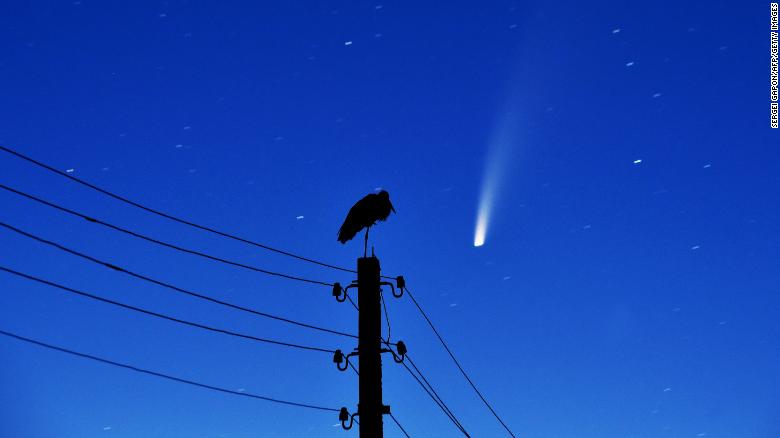
Comet NEOWISE brought delight as it streaked across our skies. It’s named after NASA’s Near-Earth Object Wide-field Infrared Survey Explorer, otherwise known as the NEOWISE mission, which discovered it in late March.A stork stands on a power lines pillar as the comet NEOWISE is seen in the sky above the village of Kreva, some 100 km northwest of Minsk, early on July 13, 2020. By observing the comet, the researchers have learned that it’s about 3 miles in diameter, the average size for a comet with a long orbit. And it’s incredibly bright, even if it’s not as spectacular as Comet Hale-Bopp as witnessed in 1997. After disappearing from view, the comet continued on its very long orbit to the edge of the solar system. This is why we won’t see the comet again in our lifetimes — it takes thousands of years to travel the outer solar system before returning to the inner solar system. But, scientists point out, this means the comet isn’t exactly new, only new to us, because it previously passed through Earth’s skies when humans were present about 6,800 years ago.
Our peculiar neighbors
The moon, Venus, Mars and Jupiter all made news with new discoveries on each planet that are intriguing researchers. New research revealed there may be more water on the moon than previously believed, including on its sunlit surface. This water could be used as a resource during upcoming missions — like NASA’s return of humans to the lunar surface through the Artemis program.The first results returned by NASA’s InSight lander revealed that Mars is seismically active and experiences Marsquakes on a regular basis.
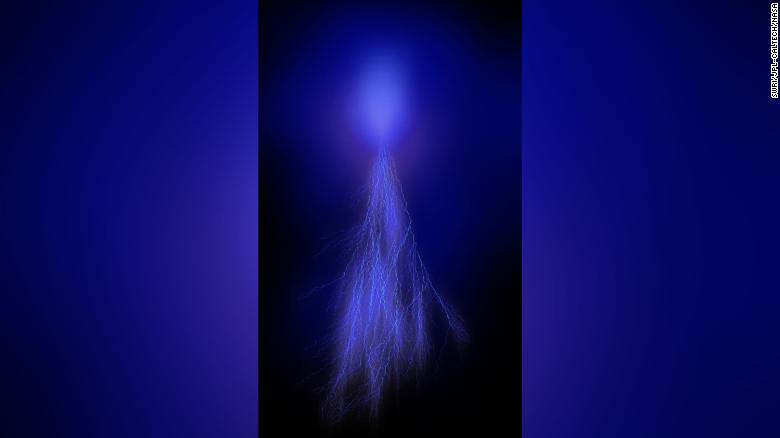
Our crazy finding suggesting life on VenusVenus may have the ability to harbor life in its clouds. A gas on Earth was also detected in the atmosphere of Venus. The discovery of phosphine could hint at unknown processes occurring on Earth’s “twin.” Phosphine suggests the presence of life on Earth. And the idea of aerial life in the clouds of Venus is intriguing. While it’s not likely, researchers want to probe this idea more in the future.The lightning phenomenon known as a sprite depicted at Jupiter in this illustration. The Juno mission at Jupiter investigated water on the largest planet in our solar system, as well as observing blue sprites and elves twirling in the upper atmosphere of Jupiter. While it may sound like something out of a fantasy novel, sprites and elves are actually two types of quick, bright flashes of light, or transient luminous events. Juno and Hubble also spied monstrous storms and the planet’s jack-o’-lantern glow.
Asteroid samples postmarked for Earth
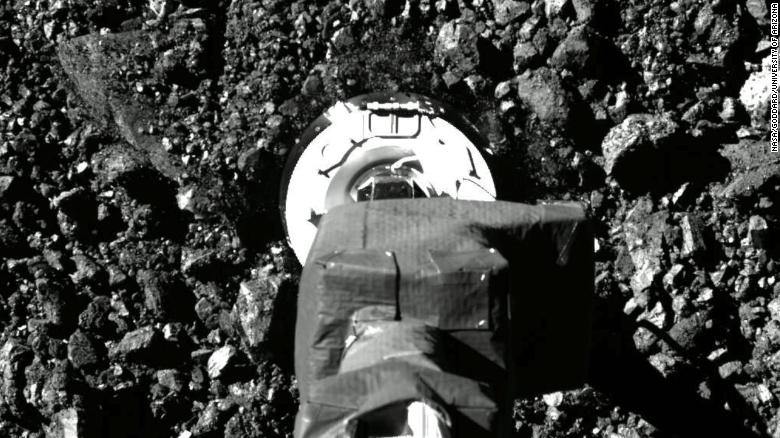
In October, NASA’s OSIRIS-REx mission briefly landed on the near-Earth asteroid Bennu and successfully collected a hefty sample from the asteroid’s surface that will be returned to Earth by 2023. It was the agency’s first mission to land on an asteroid and collect a sample, and the spacecraft sent back some great images of the historic moment.
Spacecraft cameras captured the moment OSIRIS-REx touched down on Bennu.Meanwhile, the Japan Aerospace Exploration Agency’s Hayabusa2 mission dropped off its sample collection capsule, containing samples from the near-Earth asteroid Ryugu, in December before moving on to visit more asteroids. The sample is some of the first subsurface material ever collected from an asteroid. The samples from both asteroids could tell us more about how the solar system formed and how elements like water were delivered to Earth early in its history.
Betelgeuse, Betelgeuse, Betelgeuse
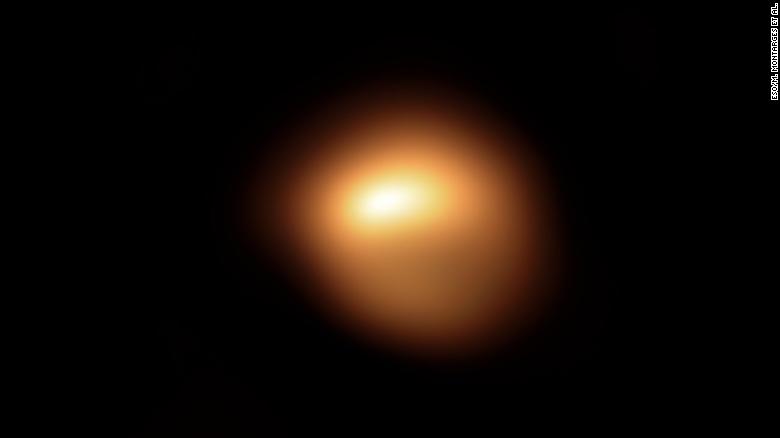
This year was all about Betelgeuse, a red giant star in the Orion constellation thought to be on the brink of a supernova explosion.The star began dimming in 2019 and continued in 2020, leading astronomers to think it may explode. This image shows the red supergiant star Betelgeuse as it was dimming in December 2019.But Hubble helped astronomers determine that the star ejected some of its material, which blocked light from the star. The star is typically one of the brightest in our sky. However, not all researchers agree on this scenario and continue to observe Betelgeuse.
Black holes in the spotlight
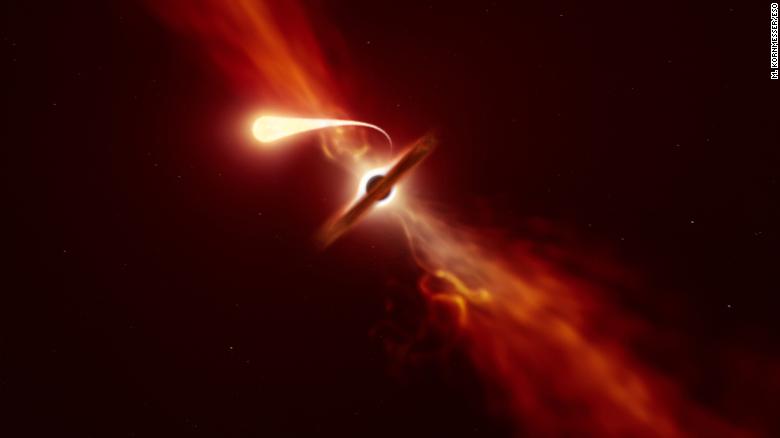
It’s kind of fitting that 2020 may go down in space discovery history as the year of the black hole — considering all of our plans for this year seemed to disappear down a black hole of their own. The 2020 Nobel Prize in Physics was awarded for black hole discoveries that revealed the “darkest secrets of the universe.”A record-breaking explosion created by a black hole 390 million light-years away was discovered by astronomers. Researchers compared the biggest explosion detected in the universe to the 1980 Mt. St. Helens eruption — except “you could fit fifteen Milky Way galaxies in a row into the crater this eruption punched” through a gaseous cluster in space, they said. This illustration depicts a star experiencing spaghettification as it’s sucked in by a supermassive black hole.Astronomers discovered the long-sought intermediate-mass black hole, the size of which is between that of supermassive black holes and smaller black holes. This finding will help scientists understand how black holes evolve. The research team was able to confirm the observation of an intermediate-mass black hole, known as an IMBH, inside a dense cluster of stars.Gravitational waves were also detected from the merging of two black holes that included an intermediate-mass black hole.Researchers also found the closest black hole to Earth 1,000 light-years away, observed the beating heart of a supermassive black hole and detected light from two colliding black holes for the first time. And astronomers witnessed the “spaghettificaton” of a star as it was shredded and devoured by a supermassive black hole.
NASA names Nancy Grace Roman Space Telescope in honor of agency’s first chief astronomerBut much of the excitement on the horizon is around rogue planets, or planets traveling through space that don’t orbit stars. Astronomers detected the smallest rogue planet in our Milky Way galaxy, and it’s between the sizes of Mars and Earth, earlier this year. Given the fact that rogue planets don’t emit light like stars, or even enough heat to be visible in infrared light, these otherwise invisible worlds are hard to spot. But NASA’s Nancy Grace Roman Space Telescope, expected to launch in the mid-2020s, could reveal a multitude of rogue planets in our Milky Way galaxy.
Fast radio bursts from space
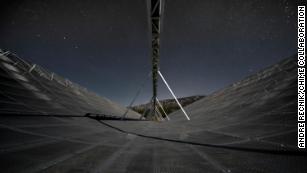
Mysterious radio signals from space have been known to repeat, but for the first time this year, researchers noticed a pattern in two separate series of bursts coming from distant sources in the universe. Fast radio bursts, or FRBs, are millisecond-long bursts of radio waves in space. The fast radio bursts known to have a repeating pattern that occurs every 16 days, while the other occurs every 157 days.
Fast radio burst may have come from the Milky Way Astronomers have yet to determine what causes these fast radio bursts, which are unpredictable but can be spotted and traced back to their origin using sensitive telescopes. The bursts are being used to find “missing matter” in the universe.And last month in a first, astrophysicists detected a fast radio burst that likely traveled to Earth from a particular type of neutron star in our Milky Way galaxy, accompanied by X-ray emissions.
A new look at our sun
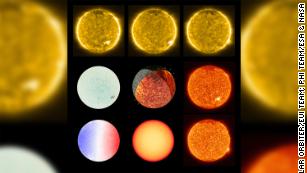
After making its first close pass of the sun this year, the Solar Orbiter mission captured the closest images ever taken of the sun. In the images, there are small solar flares called “campfires” that can be seen near the sun’s surface. The scientists don’t yet know what exactly the campfires are, but they believe they could be “nanoflares,” or tiny sparks that help heat the sun’s outer atmosphere.
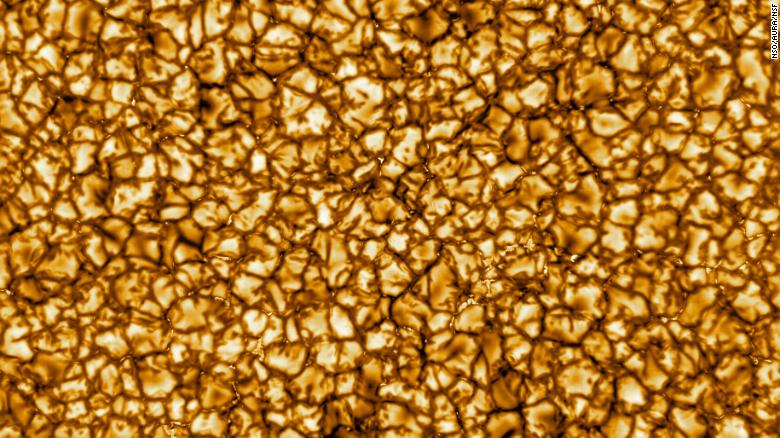
Solar Orbiter mission shares closest images of the sun, reveals ‘campfires’ near its surfaceThe first images returned by the National Science Foundation’s Daniel K. Inouye Solar Telescope revealed that the surface of our sun is a wild, violent place. Details in the images show plasma, which covers the sun, that appears to boil.The Daniel K. Inouye Solar Telescope has produced the highest resolution image of the sun’s surface ever taken. Every 11 years, the sun completes a solar cycle of calm and stormy activity and begins a new one. The sun just wrapped its first year of a new cycle.The new solar cycle, Solar Cycle 25, officially began in December 2019. Solar Cycle 25 will be very similar to the one we just experienced for the last 11 years. The next solar maximum, when the sun is experiencing peak activity, is predicted to occur in July 2025. During that time, it’s possible for solar flares or other eruptions for the sun to disrupt communications on Earth.
A glance at space in 2021
If 2020 was the year of multiple missions launching to Mars — China’s Tianwen-1, the United Arab Emirates’ Hope Probe and NASA’s Perseverance rover — then 2021 will likely be the year of new discoveries on Mars.
The Perseverance rover is on its way to Mars. What’s next? The year 2021 could also see the first observations from NASA’s James Webb Space Telescope after its October launch and “first light” from the Vera C. Rubin Observatory in Chile. First light is the first astronomical image captured by a telescope after it is completed.And NASA’s Artemis program is expected to ramp up. The science goals for the mission and the first team of 18 Artemis astronauts were announced in 2020. The Artemis program seeks to land the first woman and the next man on the moon in 2024, so updates about the goals, training and preparation for Artemis are expected throughout 2021.
Story reprinted from here: (Author Credit): Ashley Strickland, CNN
This evening, on 21 December 2020, you may be able to catch a phenomena not seen since 4 March 1226, which occurred roughly ~800 years ago. As viewed from the Earth, it will appear as these two planets, Jupiter and Saturn will ‘merge’ into one, which could be a fantastic sight for astrophotographers! The featured image was today’s Google Search Picture of the Day, and here at iPLEX, this is a reminder to go outside, observe, and be aware of the world around you, also to keep a focus for ongoing news and studies done in the science of the Solar System, and Exoplanets! Below, is a guide to help you find and observe Jupiter and Saturn in the night sky!
‘Great Conjunction’ 2020: NASA tips to see Jupiter and Saturn shine as a ‘Christmas Star’
Jupiter and Saturn will align in the night sky on Dec. 21 in an event astronomers call the “great conjunction” — also referred to as the “Christmas Star” — marking the planets’ closest encounter in nearly 400 years.
When Saturn and Jupiter converge on Dec. 21, the two planets may appear as a bright point of light that will be easily visible in the night sky. The two planets have slowly been moving closer to each other over the past few weeks.
A conjunction occurs when planets appear incredibly close to one another in the sky because they line up with Earth in their respective orbits.
“You can imagine the solar system to be a racetrack, with each of the planets as a runner in their own lane and the Earth toward the center of the stadium,” Henry Throop, an astronomer in NASA’s Planetary Science Division, said in a NASA statement. “From our vantage point, we’ll be able to see Jupiter on the inside lane, approaching Saturn all month and finally overtaking it on December 21.”
While Saturn and Jupiter’s orbits bring the planets into alignment once every 20 years or so, this year marks the first time since 1623 that the two gas giants have passed this close to one another.
This year’s great conjunction also marks the first time in nearly 800 years since the planets aligned at night and skywatchers were able to witness the event. (The 1623 conjunction wasn’t visible to skywatchers on much of the Earth because of its location in the night sky, so the last time the event was visible was in 1226.)
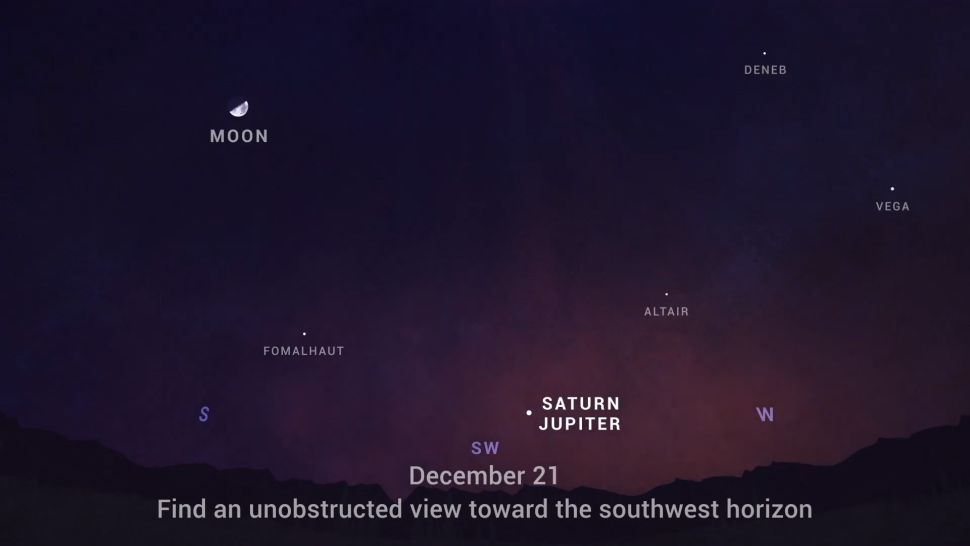
The planets will be closest to each other in the sky on Dec. 21, appearing only a tenth of a degree apart. They will remain in close alignment for a few days and will be easily visible to the naked eye when looking toward the southwest just after sunset. While the two planets may be viewed as one point of light, they will remain hundreds of millions of miles apart in space, according to the statement from NASA.
Coincidently, this year’s great conjunction also falls on the first day of winter in the Northern Hemisphere. As a result, some have referred to the planetary alignment as forming a “Christmas star,” in reference to the Star of Bethlehem, given the event falls only a few days before Christmas.
“Conjunctions like this could happen on any day of the year, depending on where the planets are in their orbits,” Throop said in the statement. “The date of the conjunction is determined by the positions of Jupiter, Saturn and the Earth in their paths around the sun, while the date of the solstice is determined by the tilt of Earth’s axis.
The solstice is the longest night of the year, so this rare coincidence will give people a great chance to go outside and see the solar system.”
How to see it
Image Credit: On Dec. 21, 2020, Jupiter and Saturn will appear just one-tenth of a degree apart, in an event known as a “great conjunction.” The planets will be visible to the naked eye when looking toward the southwest about an hour after sunset. (Image credit: NASA/JPL-Caltech)
To view the astronomical event, skywatchers should point their gaze toward an unobstructed part of the southwestern sky, about an hour after sunset since the planets will set below the horizon quickly.
Leading up to the Dec. 21 conjunction, Saturn will appear slightly above and to the left of Jupiter. Then, the planets will reverse positions in the sky, NASA officials said in the statement.
Jupiter and Saturn are bright, so they can be seen in areas with clear skies and no cloud cover — and even from most cities. This also means that the event can be seen with the naked eye. However, binoculars or a small telescope may allow viewers to see Jupiter’s four large moons, according to the statement.
Follow Samantha Mathewson @Sam_Ashley13. Follow uson Twitter @Spacedotcom and on Facebook.
Check out UCLA Professor David Jewitt featured on a recent Veritasium (Derek Muller) fun-filled episode discussing the threat of asteroids encountering the Earth and the effects on life! The science of asteroid orbits and the importance of why they are studied as a hot topic in Solar System science is discussed in detail in this episode.
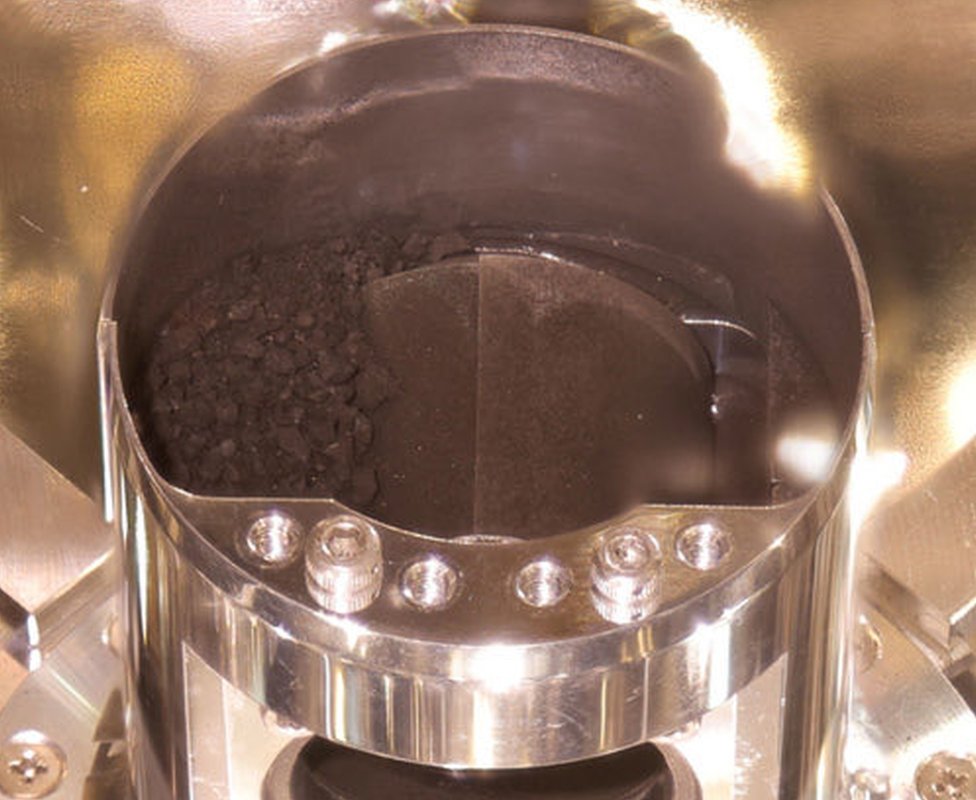
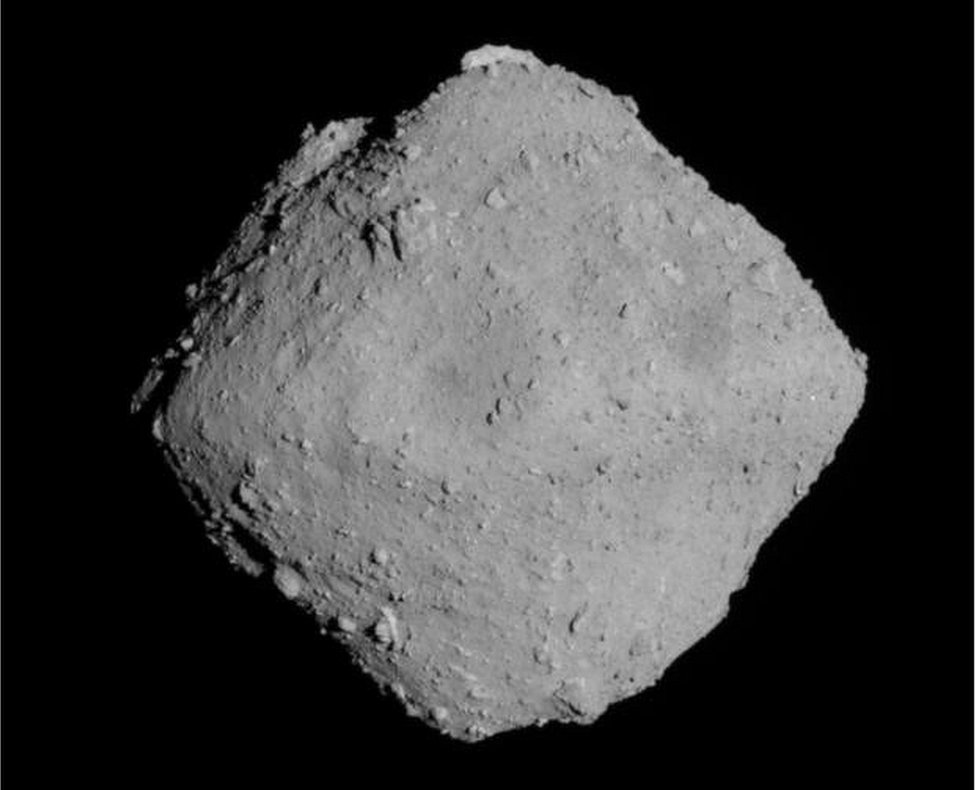
The very first samples, in human history have been recovered from the surface of an asteroid named ‘Ryugu’ (Japanese for: “Dragon Palace”, a magical underwater palace in Japanese folklore). Mysterious ‘black particles’ are in the capsule chambers, which will each tell a story of what the pristine samples of asteroids look like. JAXA, the Japanese Aerospace Exploration Agency will have the first look at these samples for about a year, before other scientists all around the world will be able to analyse them and perform new science!
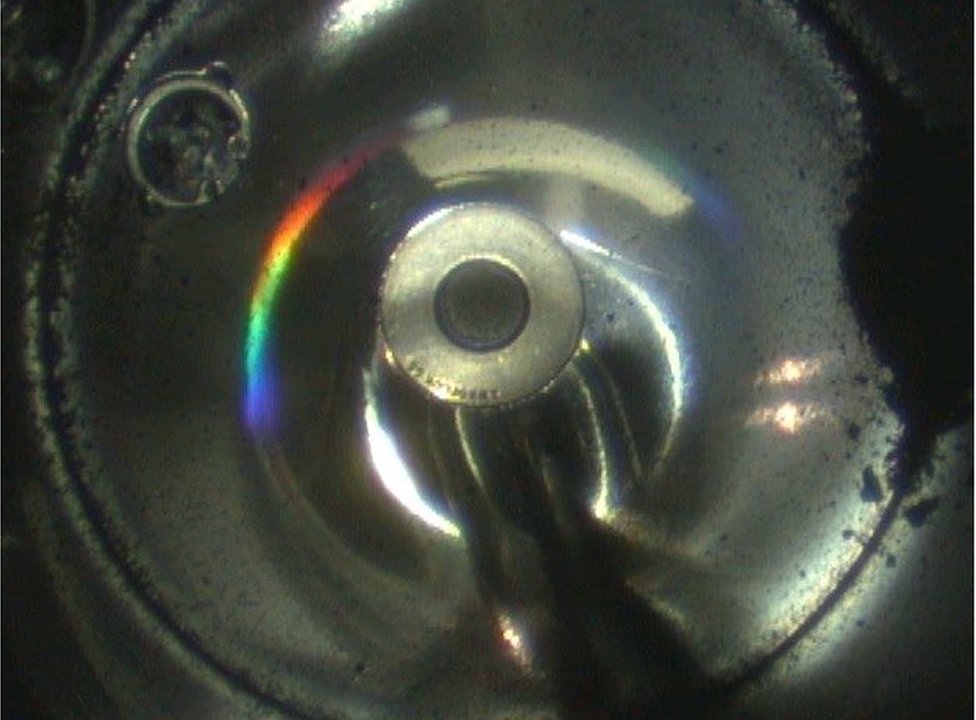
Image Caption: Chunks of rock and dust from asteroid Ryugu, contained in chamber A of the capsule
Scientists have been greeted by the sight of jet black chunks of rock and soil from an asteroid after opening a capsule that returned from deep space a week ago.
It’s the first significant sample of material to be delivered to Earth from a space rock and was grabbed last year by Japan’s Hayabusa-2 spacecraft.
Researchers began opening the capsule on Monday (GMT) in Sagamihara, Japan.
The material was retrieved from an asteroid called Ryugu.
Hayabusa-2 reached the object in June 2018; it is believed to be one of the building blocks left over from the formation of the Solar System.
Scientists at the Japanese Aerospace Exploration Agency (Jaxa) curation facility at Sagamihara have now opened one of three sample chambers inside the capsule.
This was hoped to contain particles of rock and soil from Hayabusa-2’s first touchdown on the asteroid in 2019. The spacecraft grabbed the material by firing a tantalum metal bullet into the surface and letting debris float up a collection tube under the low gravity.
Scientists had already been excited when they saw black grains from the asteroid caught at the entrance to the sample catcher (where the material is stored) on Monday. And they were not disappointed when they opened it: Inside was material ranging in size from pebbles to tiny particles of dust.
Image Caption: Hayabusa-2 reached Ryugu in June 2018
‘Pristine material’
However, this is just one of three chambers inside the capsule. Sample chamber B should be empty, but chamber C is thought to hold material collected from beneath Ryugu’s surface.
Scientists wanted to collect pristine material from Ryugu that had not been altered by exposure to the environment of space – including its radiation – for aeons. In order to do this, they had to use an explosive charge to propel a copper projectile into the surface of the asteroid.
Scientists should open this chamber in due course.
Jaxa has also announced that gas collected from the capsule is from the asteroid.
Image Caption: Some of the sample was caught at the entrance to the chamber
It was likely to have been liberated by the soil collected from Ryugu and is the world’s first sample of gas returned from deep space.
Asteroids are leftover building materials from the formation of the Solar System. They’re made of the same stuff that went into making rocky worlds like the Earth, but they continued to roam free, rather than being incorporated into planets.
Ryugu belongs to a particularly primitive class of space rock known as a C-type (or carbonaceous) asteroid.
In the early Solar System, such objects could have delivered much of the Earth’s water along with the ingredients necessary for life to get started.
When the spacecraft arrived at its target in 2018, scientists were surprised by just how dark Ryugu was. Its unexpected hue even forced controllers to adjust the laser altitude sensor used when the spacecraft approached the asteroid’s surface.
The Hayabusa-2 sample capsule returned to Earth on Saturday 5 December, parachuting down safely in the Australian desert near Woomera.
In China’s latest endeavour to explore to the Moon, our closest neighbour in space, the next successor (and fifth in a series of many successful Chang’e missions), Chang’e-5 has just recently touched down on the Moon to collect what is believed to be the youngest Lunar samples. Landing on the surface of another planetary body in the Solar System is no easy feat! The lander completed a maneuver to be placed at Oceanus Procellarum with the samples expected to arrive back at the Earth in ~2 weeks time.
Great video about Chang’e-5 and its trajectory and mission!
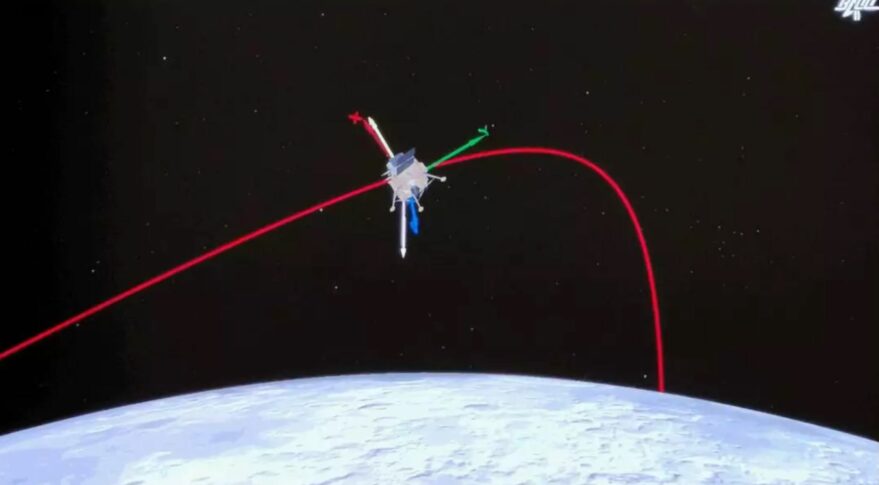
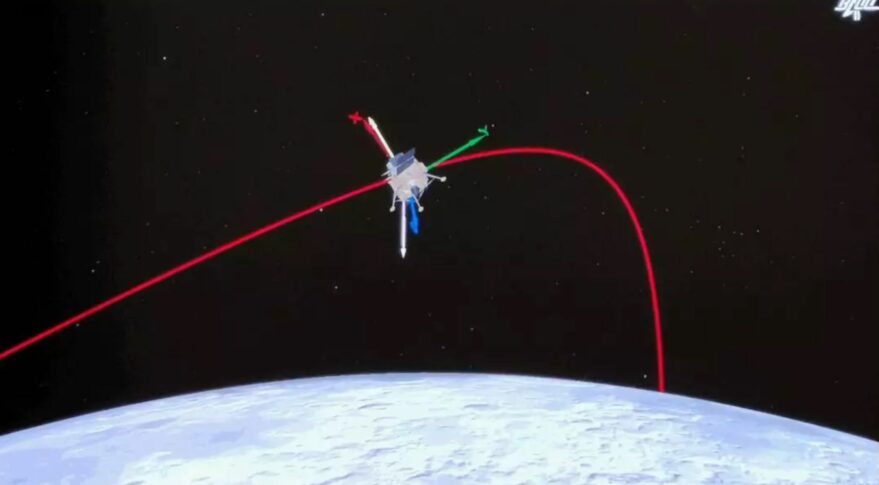
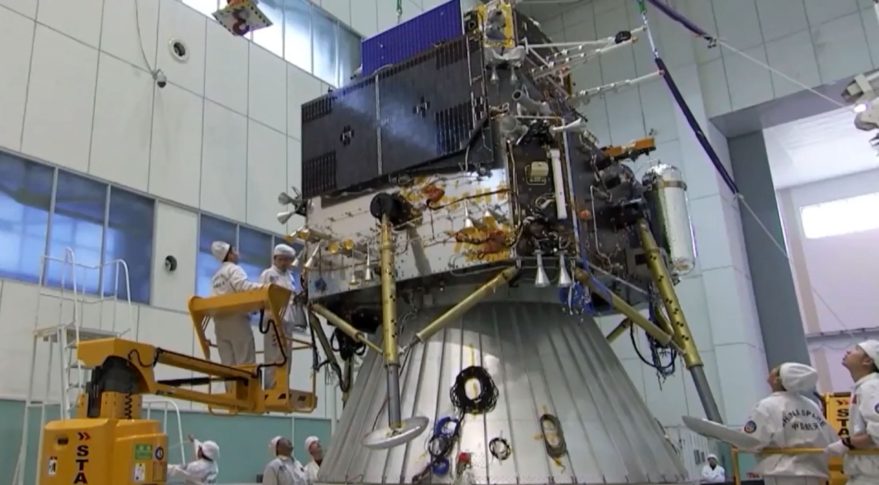
Representation of the Chang’e-5 lander in low lunar orbit ahead of landing. Image Credit: BACC
HELSINKI — China’s Chang’e-5 has successfully landed on the moon in a major step towards obtaining the youngest lunar samples so far collected and delivering them to Earth.
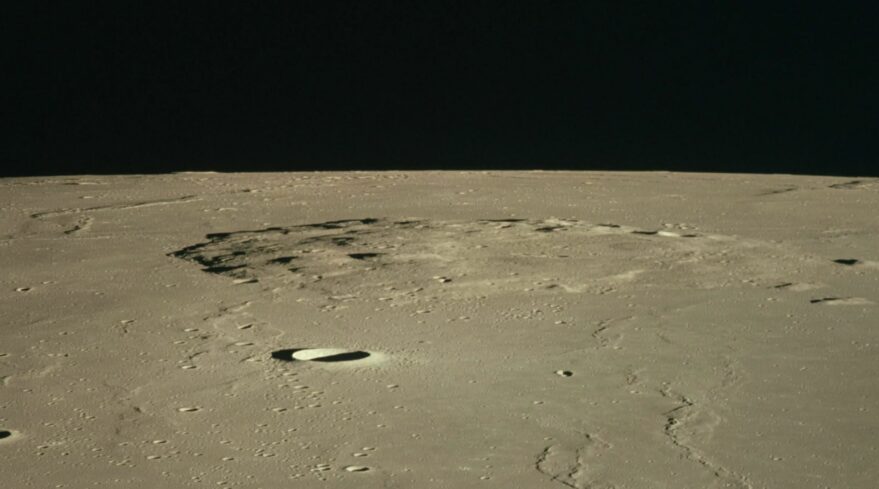
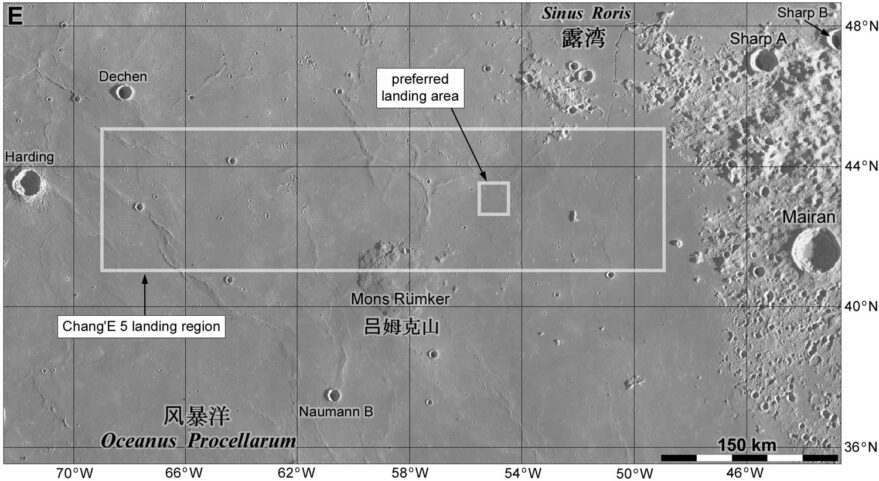
The Chang’e-5 lander initiated a powered descent at 9:58 a.m. Eastern and successfully completed its soft landing near Mons Rümker in Oceanus Procellarum (“Ocean of Storms”) 10:11 a.m. Eastern.
The lander will within a few hours begin collecting samples by drilling up to two meters into the lunar regolith, with a scoop to later take material from the surface. Liftoff of a small spacecraft atop the lander will take place in around 48 hours.
A waiting lunar orbiter will collect the samples from the ascent vehicle and deliver them to Earth around December 16.
The mission is the first lunar sample return attempt since the end of the U.S. Apollo and Soviet Luna missions in the 1970s. It is hoped the radiometric dating of samples brought to Earth will confirm the age of rock units theorized geologically youthful.
A relative lack of crater impacts observed in parts of this western edge of the moon suggest that it contains basaltic rocks created by late-stage volcanism which could be billions of years younger than those collected from Apollo and Soviet Luna landing sites.
Here's a gif of the Chang'e-5 descent and landing while we wait for the full video footage. There's a hover phase in there, but altitude is impossible to discern. pic.twitter.com/3QFitC0vcC
“With the new age data, we can calibrate the crater counting method, being more precise for young events,” Dr. Lin Yangting, at the Institute of Geology and Geophysics in Beijing under the Chinese Academy of Sciences, told SpaceNews. Additionally, scientists will conduct compositional, mineralogical and radioisotope analysis to ascertain “the nature of the young basalt and its mantle reservoir, in order to understand why the basalt erupted so [much] later.”
Thomas Zurbuchen, NASA associate administrator for science, tweeted his congratulations shortly after landing and expressed hopes that the samples could advance the international science community.
The four-module Chang’e-5 spacecraft launched on a Long March 5 rocket Nov. 23. It then embarked on a 112-hour to the moon and entered lunar orbit Nov. 28 before the spacecraft separated in preparation for the landing attempt.
The lander is carrying science, imaging and sampling equipment along with the small ascent vehicle designed to lift samples back into lunar orbit. An orbiting service module remains in a lunar orbit ready to receive the samples, a process requiring an exacting and time-critical automated rendezvous and docking with the ascent vehicle.
Tuesday’s lunar landing is China’s third, following the Chang’e-3 and Chang’e-4 missions which touched down in 2013 and 2019 respectively. Chang’e-4 also made the first ever landing on the lunar far side with the aid of a relay satellite positioned beyond the moon.
An image of Mons Rümker on the Moon captured by Apollo 15 astronauts in 1971. Image Credit: NASA
Chang’e-5: Next steps
Now on the surface, the Chang’e-5 lander has 48 hours to carry out its science and sampling activities and prepare the ascent vehicle for liftoff. 20 hours are set aside for collecting around two kilograms of lunar materials. These will consist of 0.5 kilogram samples from drilling and 1.5 kilograms scooped from the surface and placed in a container aboard the ascent vehicle.
Then follows perhaps the most challenging stages of the complex Chang’e-5 mission. The roughly 500-kilogram ascent vehicle will launch from atop the lander into a 15 by 185-kilometer orbit to meet up with the waiting service module, which is meanwhile performing phasing burns in lunar orbit. Around two days after ascent vehicle liftoff the two spacecraft will have a 3.5-hour window during which they must perform rendezvous and docking.
China has conducted rendezvous and docking operations, both automated and manually, in low Earth orbit using Shenzhou crewed spacecraft, Tiangong space labs and Tianzhou cargo vessels. This operation will however be taking place nearly 400,000 kilometers from Earth, bringing not insignificant light-time delay. It would also be the first ever robotic docking operation in lunar orbit.
After a successful docking the sample canister will be transferred from ascent vehicle to the reentry module attached to the service module. The ascent vehicle will then be jettisoned. The service module will spend 6-7 days in lunar orbit awaiting the optimal Earth return trajectory window for a reentry and landing at Siziwang Banner, Inner Mongolia 112 hours later.
The reentry vehicle will separate from the service module around 5,000 kilometers from Earth. A skip reentry, involving bouncing off the atmosphere—a maneuver tested by the Chang’e-5 T1 mission in 2014—to deal with the high-velocity return from the moon will follow. ESA tracking stations will support this critical phase as the spacecraft attempts reentry.
Samples will then be transferred to specially constructed facilities in Beijing and Hunan for handling, analyzing and storing the lunar material.
Fundamental questions
Bradley Jolliff, professor of Earth and planetary sciences at Washington University in St. Louis, says that remote sensing evidence for unusual concentrations of thorium, uranium, and potassium in the landing area pose interesting questions pertinent to Chang’e-5. “These are radiogenic heat-producing elements and may help us to understand why volcanism was so prolonged and extensive in the western Oceanus Procellarum region.”
Additionally there is the possibility of the presence of “silicic volcanics” from the Mairan Domes in the collected material, which would provide added insight into potentially the complex lunar geology of the region.
Katherine Joy, a Reader in Earth Sciences at the University of Manchester, says the additional Chang’e-5 lander radar and imaging spectrometer instrument payloads will provide vital geological context for the returned samples. These will help “reveal the sub-surface nature of the landing site, for example, revealing the thickness of underlying soil and lava flows, and also the compositional diversity of the area.”
These will “help [us] understand if the samples returned to Earth are representative of the area in which they were collected.”
Joy and Jolliff state that development of robotic sample return technologies will assist in exploration of the moon, both as a step to crewed missions and providing ability to visit scientifically interesting areas which will not be targeted by human missions.
The selected landing area for the Chang’e-5 lunar sample return. Image Credit: Phil Stooke
Backup mission, future goals
Chang’e-6 is a sample return spacecraft engineered at the same time as Chang’e-5 to provide a backup in the event of failure. Success of Chang’e-5 would however see Chang’e-6 repurposed for a landing at the lunar south pole around 2023.
China has stated it will then proceed into an extended phase of lunar exploration involving Chang’e-7 and further lunar landing missions. The aim will be to establish an ‘international lunar research station’ in the mid-to-late 2020s as a precursor to crewed landings.
Sample return technology and experience developed through Chang’e-5 is also to be utilized for planned near Earth asteroid and Mars sample return missions later in the decade. The complexity of the Chang’e-5 mission profile is considered by observers to be related to future crewed lunar landing ambitions.
“The Chinese space agency has demonstrated its capabilities several times now, and they have stayed on schedule with their ambitious plans for the past decade. They will probably do likewise with their manned exploration. I think we should cooperate in terms of the science. It’s a great way to do diplomacy,” says Jolliff.
—
Edited at 1:58 p.m. Eastern with landing time and tweet from NASA official
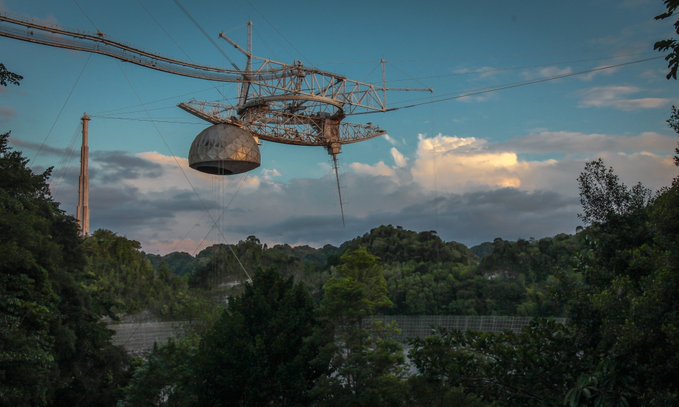
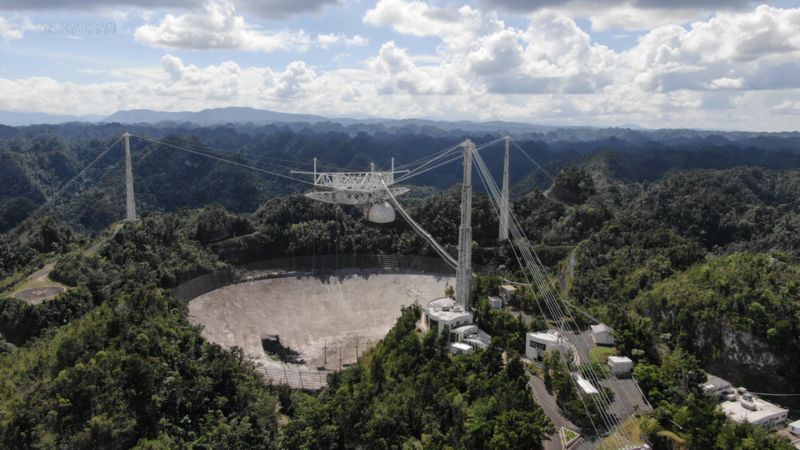
Very sad news comes to us today from Puerto Rico, with the Arecibo Observatory (a radio telescope used for decades pioneering advances in planetary and stellar astronomy) meeting its end after the 900 ton instrument platform collapsed this morning. While the telescope itself survived many natural disasters such as Earthquakes and hurricanes, the loss of support cables led to its decommissioning in November as it was unsafe for workers to fix. As of 07:55 local time, the demise of the telescope became well known and widespread with reports of loud noises and fear for locals in the vicinity. The loss of this telescope greatly impacts planetary astronomy and our knowledge of asteroids and comets in the Solar System, and beyond.
NEWLY RELEASED VIDEO FOOTAGE OF THE MOMENT THE COLLAPSE HAPPENS, INCLUDING DRONE FOOTAGE SHOWING THE COLLAPSE FROM ANOTHER ANGLE:
Video Credit: National Science Foundation (NSF)
This story has been re-printed from BBC News below:
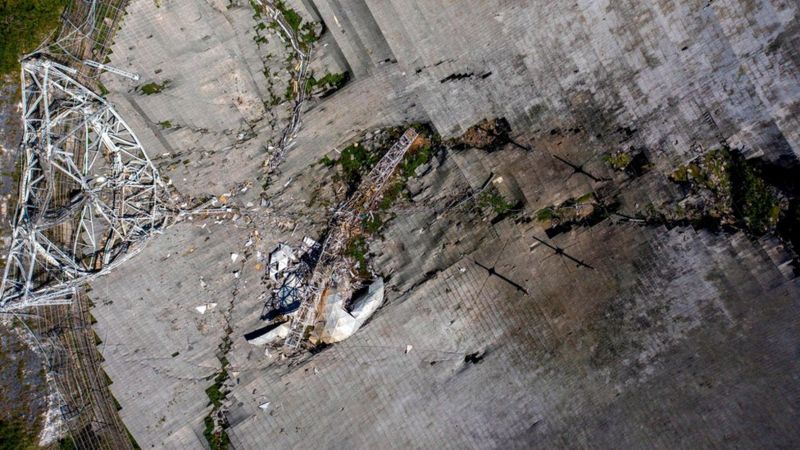
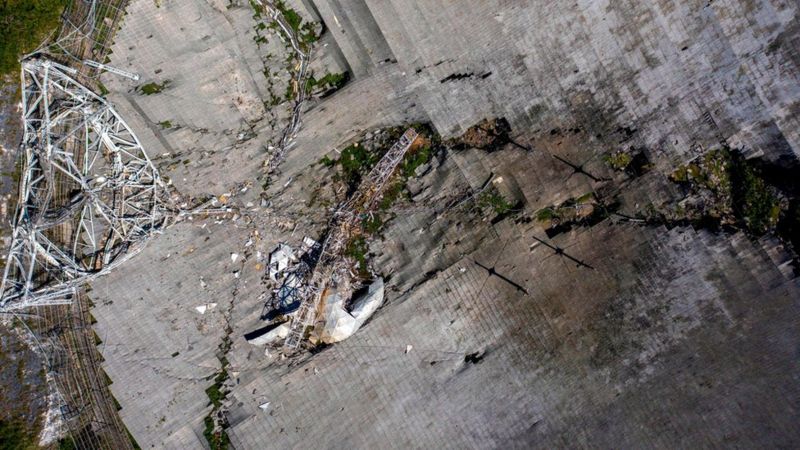
The telescope collapsed weeks after officials announced that it would be dismantled (Image Credit: AFP via Getty Images)
A huge radio telescope in Puerto Rico has collapsed after decades of astronomical discoveries.
The US National Science Foundation (NSF) said the telescope’s 900-ton instrument platform fell onto a reflector dish some 450ft (137m) below.
It came just weeks after officials announced that the telescope would be dismantled amid safety fears, following damage to its support system.
The Arecibo Observatory telescope was one of the largest in the world.
It was a key scientific resource for radio astronomers for 57 years, and was also made famous as the backdrop for a scene in the James Bond film GoldenEye and other Hollywood movies.
The NSF said there had been no reports of injuries following the collapse.
Via Twitter: National Science Foundation @NSF The instrument platform of the 305m telescope at Arecibo Observatory in Puerto Rico fell overnight. No injuries were reported. NSF is working with stakeholders to assess the situation. Our top priority is maintaining safety. NSF will release more details when they are confirmed.
What happened to the telescope?
The NSF said the telescope collapsed at about 07:55 local time (11:55 GMT) on Tuesday, “resulting in damage to the dish and surrounding facilities”.
The telescope consisted of a 1,000ft-wide radio dish with an instrument platform hanging 450ft above. The platform was suspended by cables connected to three towers.
The NSF said an investigation into the platform’s fall was ongoing.
“Initial findings indicate that the top section of all three of the… telescope’s support towers broke off. As the 900-ton instrument platform fell, the telescope’s support cables also dropped,” it said in a statement.
“Preliminary assessments indicate the observatory’s learning centre sustained significant damage from falling cables,” it added.
Two cables had broken since August, damaging the structure and forcing officials to close the observatory.
A review last month found that the telescope was at risk of catastrophic collapse and said the huge structure could not be repaired without posing a potentially deadly risk to construction workers.
The telescope was damaged in August and November. (Image Credit: Reuters)
Jonathan Friedman, who worked for 26 years as a senior research associate at the observatory and still lives near it, told the Associated Press news agency of the moment the telescope collapsed on Tuesday.
“It sounded like a rumble. I knew exactly what it was,” he said. “I was screaming. Personally, I was out of control… I don’t have words to express it. It’s a very deep, terrible feeling.”
The NSF said it was “saddened” by the collapse and would be “looking for ways to assist the scientific community and maintain our strong relationship with the people of Puerto Rico”.
“Top priorities are maintaining safety at the site, conducting a complete damage assessment as quickly as possible, and taking action to contain and mitigate any environmental damage caused by the structure or its materials.
“While the telescope was a key part of the facility, the observatory has other scientific and educational infrastructure that NSF will work with stakeholders to bring back online,” the agency said.
What is the history of the telescope?
By Paul Rincon, Science editor, BBC News website
The telescope was built in the early 1960s, with the intention of studying the ionised upper part of Earth’s atmosphere, the ionosphere. But it was soon being used as an all-purpose radio observatory.
Radio astronomy is a field within the larger discipline that observes objects in the Universe by studying them at radio frequencies. A number of cosmic phenomena such as pulsars – magnetised, rotating stars – show emission at radio wavelengths.
The observatory provided the first solid evidence for a type of object known as a neutron star. It was also used to identify the first example of a binary pulsar (two magnetised neutron stars orbiting around a common centre of mass), which earned its discoverers the Nobel Prize in Physics.
The telescope helped to make the first definitive detection of exoplanets, planetary bodies orbiting other stars, in 1992.
It has also been used to listen for signals from intelligent life elsewhere in the cosmos and to track near-Earth asteroids.
Over the years, the main dish appeared as a location in movies, including GoldenEye, Pierce Brosnan’s first outing as James Bond in 1995, and the 1997 science fiction drama Contact, starring Jodie Foster and Matthew McConaughey.
Full Original Article: https://www.bbc.com/news/world-us-canada-55147973


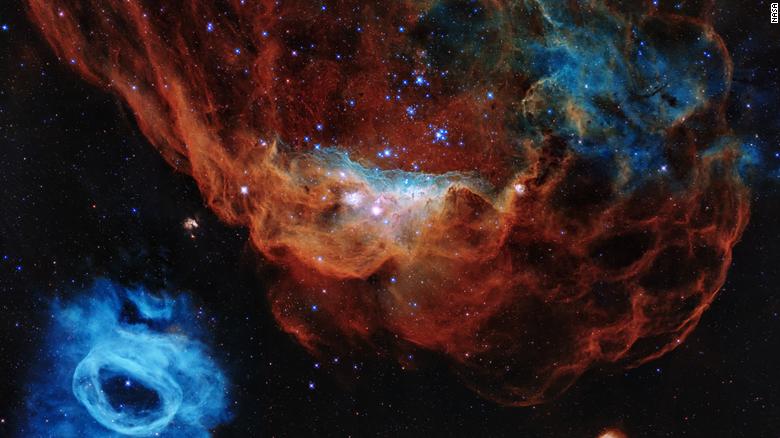 Hubble captured this image of a giant red nebula and smaller blue neighbor nebula to celebrate its 30th anniversary in April.Hubble teams in 2020 have continued to release new images and contributed to a wealth of discoveries. Hubble’s scientists believe that the telescope will keep operating through at least 2025, if not longer.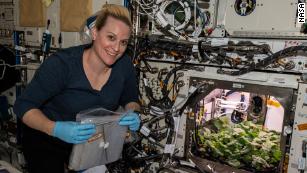
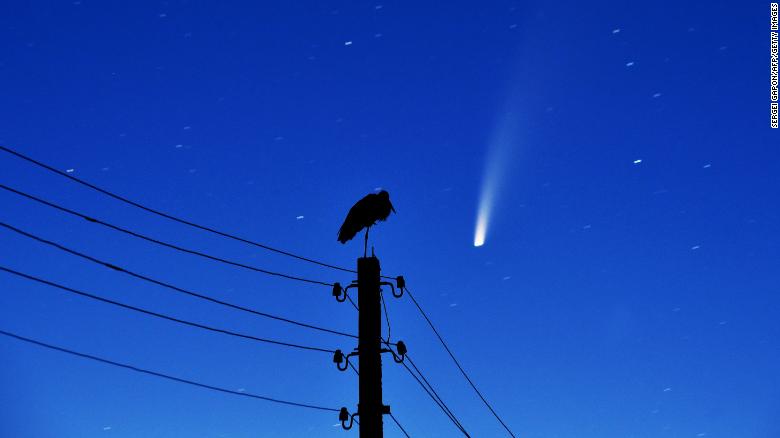 A stork stands on a power lines pillar as the comet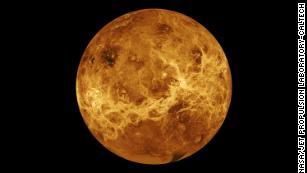
 The lightning phenomenon known as a sprite depicted at Jupiter in this illustration. The Juno mission at Jupiter investigated
  Spacecraft cameras captured the moment OSIRIS-REx touched down on Bennu.Meanwhile, the Japan Aerospace Exploration Agency’s
  This image shows the red supergiant star Betelgeuse as it was dimming in December 2019.But Hubble helped astronomers determine that the
  This illustration depicts a star experiencing spaghettification as it’s sucked in by a supermassive black hole.Astronomers discovered the long-sought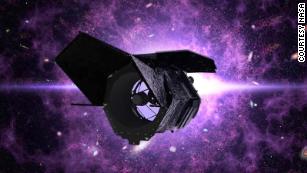
 The Daniel K. Inouye Solar Telescope has produced the highest resolution image of the sun’s surface ever taken. Every 11 years, the sun completes a solar cycle of calm and stormy activity and begins a new one. The sun just wrapped its first year of a new cycle.The new solar cycle,